
The numbers are difficult to ignore. According to our 2027 B2B Influencer and Creator Marketing Report, 93% of B2B marketers rate their influencer programs effective, and 83% are running a program or planning to launch one within the year. Despite statistics like this, many brand leaders still have one key question: Where does influencer marketing fit into my already robust marketing mix?
At TopRank Marketing, we’ve spent the last 15-plus years answering this question for midsized to enterprise brands across industries, from tech to healthcare, supply chain, SaaS and everything in between. With so many options to choose from, including pilot programs, integrated influencer content campaigns and highly powerful always-on strategies, there’s a fit for every need.
B2B influencer marketing program types and goals
While the scope and scale of B2B influencer marketing programs may vary, they all offer similar benefits, just in different ways. Before we dive into the specifics, it’s important to note that the advantages companies see from influencer marketing are closely tied to the goals they set. While this may seem obvious, the way influencer marketing is leveraged can significantly influence outcomes. Let’s quickly take a look at our two types of recommended programs.
Integrated Influencer Content Marketing Campaigns
Typically runs for several months and across multiple channels, producing valuable content and helping identify the most effective influencers.
Example: Smartsheet’s #FruitfulWork campaign featured five influencers and spanned several months, as the brand and influencers shared evergreen content ranging from articles to videos to social posts.

TopRank Marketing Case Study: How Smartsheet Built Awareness with B2B Influencer Marketing
Always-On Influencer Programs
Over time, this influencer marketing strategy builds a rich content library and nurtures ongoing relationships with influencers who help accelerate both the quality and reach of the content, as well as foster organic advocacy.
Today, 48% of B2B marketers describe their approach as always-on, compared to 33% who run campaign-based programs.
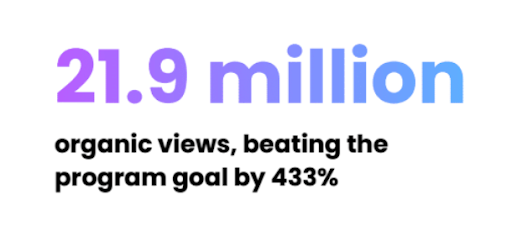
Example: Asana built a long-term, always-on influencer program instead of a single campaign push, pairing a mega influencer with mid-tier and nano creators who each played to their strengths. The program generated 21.9 million organic views across 52 videos, beating its goal by 433%.
Now that you’re familiar with the different approaches, let’s explore five key outcomes B2B companies like yours can achieve by working with influencers.
1. Influencers add credibility and authenticity to brand content
“Collaborating with experts that are respected authorities on the topics of influence produces content, communications and often advocacy that is believable, is empathetic to the concerns and goals of real customers and is trusted by the audience the brand is trying to reach.” – Lee Odden, CEO, TopRank Marketing
What happens when a brand identifies the topics that truly matter to its customers? It can finally connect with people who already have influence on those topics. By teaming up with experts who are respected authorities in the subject matter area, brands can create content that truly resonates. This approach feels authentic, speaks to the real concerns and goals of customers, and earns the trust of the audience the brand wants to reach.
Our 2027 report found that trustworthiness and credibility with their audience (46%) is the top criterion B2B marketers use when selecting influencers, well ahead of audience size (30%) or engagement rate (31%).
Learn more: Trusted Voices, Trusted Brands: How B2B Influence Powers Buyer Confidence
2. Partnered with executives, influencers build brand thought leadership
Connecting external influencers with internal executives to collaborate on content, video conversations, virtual events and similar exchanges of ideas can validate key leadership messages.
Connecting trusted industry voices with brand messaging drives credibility, differentiation and leadership. Examples might include:
- Running a webinar discussing the findings of your most recent research
- Creating an in-depth whitepaper exploring a key topic
- Conducting a series of livestream videos or podcast interviews between key executives and external influencers
Very effective programs are nearly twice as likely to partner with executive-level leaders as creators (43% vs. 24% of all others)
3. Influencers enhance content integration and reach
“Trust is not something you can get, it’s something you earn, through experience, expertise and authority. When an independent voice with real credibility speaks on your behalf, you’re borrowing trust they spent years earning. That’s worth more to a B2B brand than audience size alone.” – Michael Brenner, VP of Storytelling, Workday (2027 B2B Influence and Creator Marketing Report)
Relationships with B2B creators are formed online, but their reach extends far beyond social media platforms and, when executed properly, can support a broader marketing strategy.
Once created, influencer content shouldn’t just be published, engaged with once and then banished into the ether. Instead, their content can be utilized in ads, email campaigns, and web content in order to amplify the reach of your marketing campaign. This type of content integration allows brands to connect with their audience in multiple places, creating a cohesive far-reaching impact.
Per our report, integrating influencer content with content marketing is now table stakes (57% of very effective programs vs. 56% of everyone else). The real differentiation shows up elsewhere: paid media (53% vs. 38%), events (49% vs. 34%), ABM (43% vs. 25%) and sales enablement (42% vs. 25%).
Integration in practice: Sprinklr and TopRank Marketing Bring Product Marketing to Life with an Influencer-Driven Masterclass Event
4. Influencers accelerate content production, promotion and impact
When effectively designed and planned, an influencer engagement effort creates a community of influence that the brand can tap for a variety of content creation efforts. Imagine having a group of 10, 25 or in some cases more than 50 industry experts on tap to engage on content projects.
Developing a community of influencers means creating genuine relationships based on mutual benefit and shared values, which is a hallmark of always-on influencer marketing. Not only does an engaged base of influencers help create content, but they are invested in the success of content distribution and impact because it benefits their own interests and that of their audience.
Always-on programs attribute nearly double the revenue to their influencer marketing compared to campaign-based programs (42% vs. 24%)
5. Influencer collaborations boost brand visibility in AI search
“The role of trusted voices has elevated to both inform LLMs and influence humans about which solutions are the best answer. Visibility is no longer possible without credibility.” – Lee Odden, CEO, TopRank Marketing
B2B buyers are increasingly asking AI for answers, and answer engines don’t cite brands so much as the trusted third-party voices around them. Third-party research shows that roughly 89% of citations for unbranded prompts come from third-party sources rather than brand-owned content, and brand web mentions correlate with AI citation rates about 3x more strongly than backlinks do.
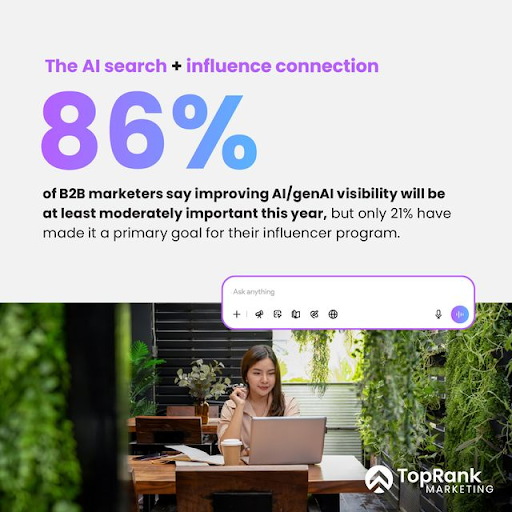
This is one of the most critical benefits of B2B influencer marketing in the current discovery landscape, but it’s also one that many brands are failing to optimize around and measure. Our 2027 report found that while 86% of B2B marketers believe improving AI visibility is at least moderately important, only 21% cite it as a primary program goal.
But among those who are tracking their program’s impact on AI visibility, nearly all report some benefit:
- 34% say their brand is cited in AI-generated responses
- 32% report Google AI Overview/SearchGPT appearances
- 31% report traffic from AI assistants
- Only 8% tracked these outcomes and saw no impact
Of course, this is not a comprehensive list of all the benefits B2B brands gain from working with influencers; there are many more. Creative differentiation, scalability for growing brands, and acceleration of the buyer journey are just a few.
While many B2B marketers may only skim the surface of what’s possible when working with influencers and creators, those who dig deeper can uncover tremendous value. Beyond short-term campaign impact, influencer collaborations can enhance long-term brand perception and thought leadership within an industry.
At the end of the day, the quantitative and qualitative data paints a definitive picture of the benefits, B2B influencer marketing is no longer an experiment but a proven, scalable strategy for brands looking to get ahead.
Read the full 2027 B2B Influencer and Creator Marketing Report to see the big picture of B2B influence and how to unlock its benefits for your organization.
The post 5 Ways B2B Brands Are Winning with Influencer Marketing appeared first on TopRank® Marketing.
from TopRank® Marketing https://ift.tt/tvIOfDu


0 Comments